Your roof may look perfect while slowly deteriorating right now. That is the reality of living in Tempe. Beneath the tiles lies a waterproofing layer that is literally “baked” under the Arizona sun. When this layer dries out, problems begin.
Many homeowners in the Valley face a difficult choice: spend a large sum on a new roof or try to save the existing one through restoration. Making this decision is not easy.
In this article, we will explain when tile roof restoration truly works and when full replacement is the only way to protect your home. We will also clarify how residential roofing companies determine the future of your roofing system. If you know what to look for, you can save thousands of dollars.
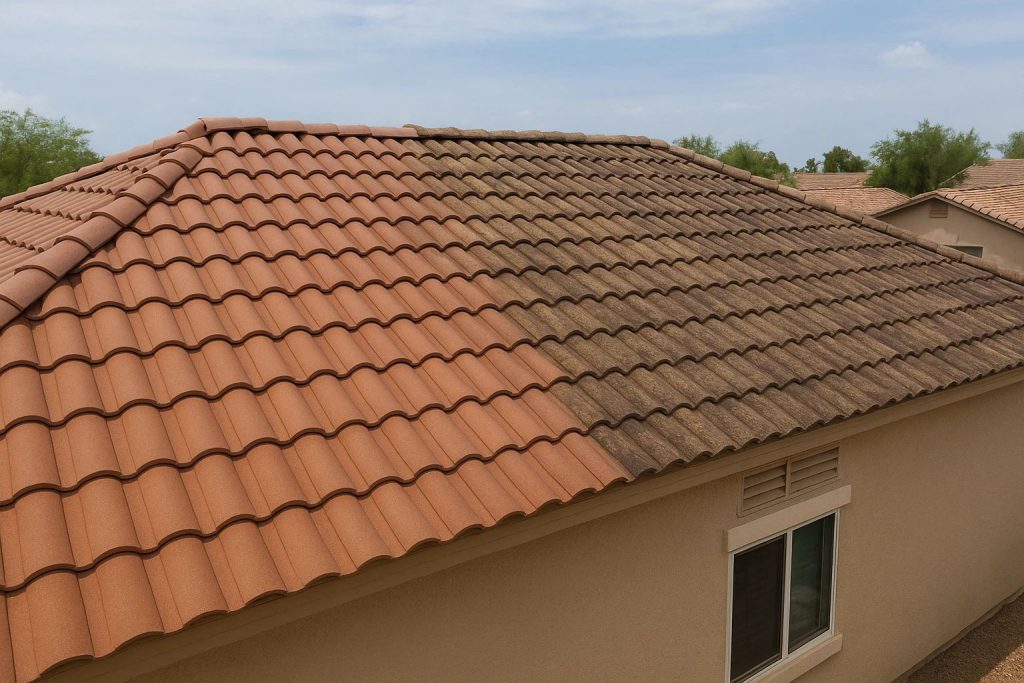
When Is Roof Restoration Enough Instead of Replacement?
Restoration is a deep technological renewal of the entire roofing system. A tile roof is designed to last for decades, and restoration is the tool that helps it reach that lifespan. However, in Tempe, this process has its own unique specifics shaped by the climate.
The main enemy of your roof is the relentless Arizona sun. During the day, tiles heat up to extreme temperatures, and at night they cool down rapidly. This constant cycle forces roofing materials to expand and contract.
As a result, roof components age at different rates. The tiles themselves are nearly immune to ultraviolet radiation and can last 50 years or longer. However, the waterproofing layer beneath them deteriorates much faster. Over time, the sun essentially “bakes out” the protective oils from the underlayment, turning it into a brittle, dry material.
This is exactly why the Lift and Reset method (also known as R&R) has become widely adopted in Tempe. When local residential roofing companies talk about restoration, they are almost always referring to this process. Technicians manually remove each tile from your existing roof and carefully set it aside. The old, dried waterproofing is completely removed down to the deck. A new underlayment is then installed, and your original tiles are placed back on top.
This approach preserves the home’s appearance while saving homeowners significant amounts on the cost of new materials.
How can you tell that it is not too late for restoration? For a residential roofing company in Tempe, the key factor is the depth of the problem. Restoration is sufficient if the damage is only surface-level:
- the tiles remain strong and do not crumble when lifted;
- leaks appeared recently and are localized;
- the wooden decking beneath the tiles is dry, with no mold or dark stains;
- the overall roof geometry is even, without sagging areas.
Experienced technicians at TEMPE ROOFING use what is known as a “break test.” They lift tiles in several areas and try to bend the edge of the underlayment. If the material snaps with a distinct crunch like a dry cracker, it has fully deteriorated. Functional waterproofing should remain flexible, like leather. If it crumbles under your fingers, replacing individual tiles will not protect the home from the next heavy rain. In this case, any honest residential roofing company will tell you: it is time for a full tear-off.
What is the difference between restoration and replacement?
The main difference lies in what is sent to the landfill. During tile roof restoration, the original tiles are preserved whenever possible. Replacement involves a total teardown: the old roofing system is removed down to the base, and you receive an entirely new system “from scratch.”
Is restoring your roof worth it?
If the tiles are still strong, tile roof restoration is cost-effective. You save nearly half the cost of a new roof while receiving the same level of protection against leaks and heat. However, if the underlayment has already deteriorated, investing in restoration loses its value.
How often should you do roof restoration?
In Tempe, the condition of tile roofs should be evaluated every 10–15 years. Ultraviolet exposure is aggressive here, and the underlayment wears out quickly. Regular inspections involving a licensed roofing contractor help identify the moment when restoration is still possible. Timely waterproofing renewal once every couple of decades costs significantly less than addressing the consequences of a major leak or mold inside the walls.
Is it better to repair a roof or replace a roof?
It depends on the scale of the damage and the age of your roof. If you have a few cracked tiles after a storm, localized repair is sufficient. But if the underlayment has begun to crumble across the entire surface, patching individual areas is pointless. Residential roofing companies follow this logic: if the cost of a high-quality restoration approaches the price of a new roof, a full replacement is the smarter choice.
When Does Roof Removal Become Necessary?
Full roof removal is required when systemic wear has affected not only the waterproofing layer but also the structural “skeleton” of your home. Watch for these warning signs:
- Granules in the gutters. If you find large amounts of sand or small concrete fragments in the gutters, this indicates the tiles themselves are deteriorating.
- Waves or sagging areas. If you look along the roof slope and notice uneven sections or depressions, this may signal problems with the wooden decking.
- Slipping tiles. Tiles begin sliding in entire rows, exposing dark patches of the old underlayment.
- Multiple leaks. Water appears in different rooms after every heavy rain.
- System age. Your roof is over 25–30 years old and has not undergone any major updates.
If you recognize at least two or three items from this list, the issue has moved beyond cosmetic repair. The problem is likely structural and hidden from view.
One of the most significant reasons for roof removal in Arizona is spalling, the physical breakdown of concrete or clay tile. Once tiles begin to delaminate, they cannot be reused. During restoration, crews must walk on the roof, and brittle tiles will crack under their weight like eggshells. In this situation, any restoration attempt becomes impractical.
The condition of the wooden decking can be even more serious. If moisture from monsoon seasons has accumulated beneath slipping tiles for years, the plywood may turn soft and unstable. Installing new underlayment over rotted wood violates safety standards because fasteners will not hold properly. In such cases, any licensed roofing contractor must insist on a full tear-off to replace the damaged base.
In Arizona, the situation is further complicated by a biological factor. Damp wood in rafters and decking attracts termites. If you choose restoration instead of roof removal, you risk leaving an active infestation inside the structure. A contractor simply will not see damaged beams beneath layers of old materials. Only a full roof tear-off allows professionals to detect and eliminate insects before they cause irreversible damage to the building’s frame.
Finally, building regulations and code compliance must not be overlooked. In Arizona, roofing work is governed by the International Residential Code (IRC) with local Tempe amendments. According to these rules:
- The law prohibits installing a new roofing system if the roof already has two layers of materials.
- If damage affects more than 25% of the roof area, many municipalities require full replacement of the entire slope.
Additionally, insurance companies often influence the replacement decision. For insurers in Tempe, the age of the roof becomes an important factor. If the system is more than 20 years old and has many signs of spot repairs, you may be denied policy renewal or compensation after a storm. In this case, only a full removal and installation of a new system will help. It is important that everything is done in compliance with all codes. Only in this way can the roof’s age be “reset” in the documents.
Is it better to remove an old roof?
Yes, if the underlayment is worn out or moisture has reached the decking. In Tempe, extreme heat accelerates material aging. Installing a new roofing system over old layers can trap heat inside the roofing assembly, shortening the lifespan of the entire structure. A complete roof removal allows contractors to inspect the rafters for rot and helps ensure full compliance with local building codes.
How to tell if a roof needs to be replaced?
The main warning signs include brittle or crumbling tiles, widespread tile slippage, visible decking sagging, and leaks appearing in multiple areas of the home. In Arizona, intense UV exposure causes materials to deteriorate faster than their standard lifespan. If repairs are needed more than once a year or begin affecting large sections of the roof, many residential roofing companies in Tempe recommend replacement instead of restoration.
Should I replace my roof if it’s not leaking?
The absence of active leaks does not guarantee that a roof is structurally sound. Underlayment and fasteners can deteriorate beneath the tiles long before water reaches interior living spaces. For this reason, many residential roofing companies advise homeowners to begin evaluating replacement once a roof approaches the 20–25 year mark. Acting early helps reduce the risk of sudden structural issues or hidden moisture problems during Tempe’s monsoon season.
Tile Roof Restoration vs New Tile Roof Installation in Tempe: Which Is Better?
If your tiles remain structurally sound and show no signs of crumbling, tile roof restoration is an effective way to protect your investment. You receive a completely renewed waterproofing layer while preserving the original tile.
A full roof replacement offers its own advantages. It is a major upgrade that benefits from significant advances in roofing materials over the past two to three decades. Modern tile roof installation now incorporates energy-efficient technologies that simply did not exist 20 to 30 years ago.
One of the most important innovations is the cool roof concept. Modern tiles can reflect a large portion of solar radiation, helping prevent the attic from overheating. When paired with proper ridge ventilation, homeowners may reduce air conditioning demand by approximately 10 to 20 percent, depending on insulation and overall home efficiency. Achieving this level of thermal performance is far less likely with restoration alone.
| Characteristic | Tile Roof Restoration (Lift and Reset) | New Tile Roof Installation |
|---|---|---|
| Upfront Cost | Typically 2 to 2.5 times lower than replacement | Significant investment |
| Lifespan | +20 to 25 years with new underlayment | 50+ years |
| Energy Savings | Minimal, since the original tile remains | Potential for meaningful electricity savings |
| Warranty | Usually covers labor and underlayment (about 10 to 12 years) | Full manufacturer warranty for the system |
| Visual Impact | Clean, refreshed appearance | Completely new look |
| Home Value | Helps preserve current value | Can noticeably improve resale appeal |
Tile roof installation in Tempe becomes more attractive if you plan to own the property for decades. It minimizes the likelihood of major roofing work for many years.
However, if the existing tile is in excellent condition and your budget is limited, restoration remains a practical priority. It addresses the primary vulnerability, the aging underlayment, without the additional expense of purchasing new materials. The key is timing: this option remains viable only until the original tiles begin to physically deteriorate.
What is the average cost of a full roof replacement?
In Tempe, a full tile roof replacement typically costs between $12,000 and $30,000, though larger or more complex homes may exceed this range. The final price depends on the size of the house, roof complexity, and material selection. Tile roof installation is more expensive than asphalt roofing due to the weight of the materials and the need for highly skilled manual labor. Only an in-person inspection allows a residential roofing professional to provide an accurate estimate.
What is the most expensive part of replacing a roof?
The largest expense is usually skilled labor. Costs also include roof removal, disposal of heavy construction debris, and replacement of the underlayment. Choosing premium clay tiles or specialized concrete products can significantly increase the total budget as well.
What is the best time of year to replace a roof?
Late fall, winter, and early spring are generally the best seasons for roof replacement in Tempe. Scheduling work during milder weather helps crews avoid extreme summer heat and reduces the risk of delays associated with monsoon storms.
How Residential Roofing Companies in Tempe Make the Final Recommendation
When a licensed roofing contractor gets onto your roof, they must conduct a comprehensive audit. The technician evaluates the following parameters:
- Flashing condition. Metal around chimneys and in valleys is inspected, as leaks begin in these areas in up to 90% of cases.
- Underlayment flexibility. If the waterproofing cracks when touched, restoration is no longer possible.
- Deck integrity. Soft spots underfoot indicate hidden rot that cannot be resolved without roof removal.
- Fasteners and ventilation. The contractor checks whether nails are backing out of dried wood and whether sufficient airflow circulates beneath the tiles.
At TEMPE ROOFING, the team maintains a balance between safety and cost efficiency. As a responsible contractor, the company does not recommend replacement if the system is still suitable for restoration. This approach helps reduce expenses without compromising the home’s protection.
How old may a roof be before insurance claims it’s too old?
In Arizona, 20 years is often considered a critical threshold. Insurers may require an inspection by a licensed roofing contractor or limit coverage due to the accelerated wear of the underlayment under intense sun exposure.
Is a 20 year old roof too old?
For a tile roofing system in Tempe, 20 years is viewed as a “critical age.” The tiles themselves may still appear to be in good condition, but the underlayment beneath them typically begins to lose its protective properties by that time.
Is roof replacement tax deductible?
Roof replacement is considered a home improvement. It does not directly reduce your taxes, but it can increase the property’s resale value and may qualify for certain energy-efficiency incentives.
Conclude
Choosing between restoration and replacement requires a professional inspection. If restoration is sufficient in your case, it can help you save tens of thousands of dollars. However, if the structural components of the home are compromised by rot or termite damage, a full replacement may be the only safe solution.
FAQ
Yes, if the underlayment is still in good condition. Residential roofing companies perform this type of repair to prevent leaks and protect the waterproofing layer.
Yes, if the tiles remain structurally sound and are not crumbling. However, a licensed roofing contractor must inspect the materials and discard any brittle or damaged pieces before reinstallation.
This refers to a building code guideline commonly adopted in many jurisdictions. If more than 25% of a roof section is damaged within a certain period, a full replacement of that section may be required rather than spot repairs. Local regulations in Tempe should always be verified.
Tile itself can last 50 years or more, but underlayment in Arizona typically wears out within 20–30 years due to prolonged heat exposure. Once it reaches this stage, restoration or full system replacement is usually necessary.
Concrete and clay tiles commonly last 40–50 years. With proper maintenance and timely underlayment replacement, the overall lifespan can exceed 60 years.
Tiles should be replaced when cracks, chips, delamination, or excessive water absorption appear. Replacing damaged tiles early is one of the simplest ways to prevent moisture intrusion and protect the roof deck from deterioration.